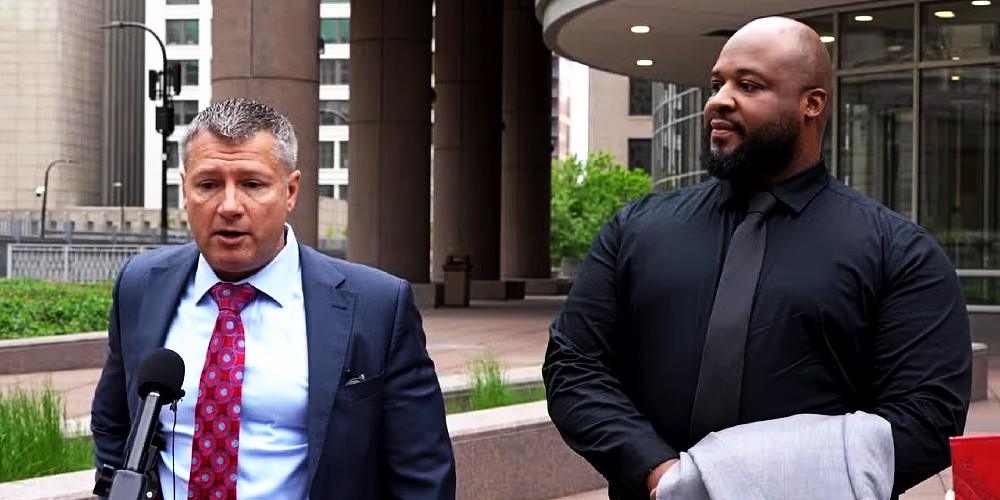
An ICE agent is staring down as many as six years behind bars for a February highway encounter in Minnesota during which nobody was hurt. Gregory Morgan, deployed for Operation Metro Surge, displayed his firearm in a low-ready position and yelled “Police, back off” after a Cadillac driver allegedly swerved into his path twice and brake-checked him hard enough to come within inches of a collision.
Hennepin County Attorney Mary Moriarty charged him anyway with two counts of second-degree assault with a dangerous weapon. His lawyers say the case is a deliberate political strike that could open the floodgates for progressive prosecutors nationwide to target federal officers carrying out President Trump’s immigration enforcement.
The facts matter here. On February 5, Morgan was returning to base under direct orders after withdrawing from a hostile neighborhood where a protester had threatened to kill him. He was in an ordinary unmarked rental vehicle with no emergency lights or sirens. Unfamiliar with Minnesota roads, he drove on the shoulder.
The Cadillac driver later told investigators he “got the ICE vibe from him at first” and made a “not so bright decision to try to stop” the agent. Both Cadillac occupants invoked their Fifth Amendment rights and refused to testify at the evidentiary hearing. Morgan testified and was cross-examined. No shots were fired. No one was injured. Prosecutors still waited ten weeks before charging him, then issued a nationwide arrest warrant and set bail at $100,000 even though he was willing to surrender peacefully.
Moriarty has publicly called Operation Metro Surge an “occupation.” That rhetoric is now part of the defense argument that her office is driven by hostility rather than evidence. Morgan’s attorneys note that a prosecutor’s decision on whom to charge is the most direct form of prejudice possible. The case is being fought in federal court under a statute with roots in the War of 1812 and expanded by Congress in 2011.
The law allows removal when an officer’s actions are sufficiently related to his federal duties and a plausible federal defense exists. Prosecutors claim it was mere “road rage” once he left a target address. Defense filings reply that nothing in the state’s briefs explains why federal authority to protect officers vanishes the moment they reach a highway.
If the case stays in federal court, Morgan’s team will seek dismissal under the Supremacy Clause, which shields officers from state liability for reasonably necessary actions authorized by federal law. A federal jury pool drawn from the southern two-thirds of Minnesota would be far less hostile than one drawn from Hennepin County, where defense attorney Ryan Pacyga says the majority are anti-ICE.
A conviction would end Morgan’s law enforcement career and could stack two three-year sentences. He has already lost tens of thousands in overtime after being reassigned. He shares custody of his daughter. Pacyga put it plainly: “He is caught in the middle of a huge political battle that he has nothing to do with.”
Former U.S. Attorney Rachel Paulose, who is helping with the federal-court fight, called the case “the tip of the spear.” What happens here will shape what other politically motivated district attorneys do to agents carrying out orders from an administration they despise.
“Unpopular initiatives can be defeated at the ballot box,” she said. “Unpopular politicians can be voted out by the people, but law enforcement officers who are simply doing their job should not and cannot be targeted, persecuted, and prosecuted under our Constitution.”
This is not an isolated skirmish. Operation Metro Surge was a major federal effort to enforce immigration law in the Twin Cities amid heavy resistance. Other agents have faced state charges. Antifa-linked activists have been indicted in related federal probes. Progressive prosecutors in blue jurisdictions have treated federal immigration enforcement itself as the crime while soft-pedaling violence against agents and bystanders. The Constitution does not grant local officials a veto over federal law.
Scripture is equally clear on the role of governing authority. “For he is the minister of God to thee for good. But if thou do that which is evil, be afraid; for he beareth not the sword in vain: for he is the minister of God, a revenger to execute wrath upon him that doeth evil.”
Morgan’s lawyers are prepared to appeal to the Eighth Circuit if a judge sends the case back to state court. Other cases around the country are watching. A ruling that local prosecutors can criminalize routine self-protection by federal officers during immigration operations would not stay in Minnesota. It would become a playbook.
Agents already operate under intense hostility in sanctuary jurisdictions. Adding the threat of state felony prosecutions for actions that injure no one is not accountability. It is lawfare designed to deter the enforcement of federal immigration statutes against illegal aliens. The outcome here will decide whether that tactic works.