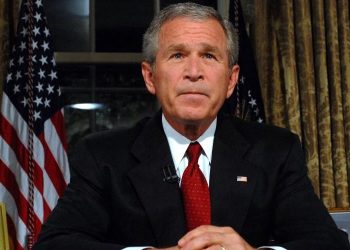
- Travis County DA José Garza is facing renewed criticism after career criminal Caleb Anthony Jenkins was charged with murdering a 25-year-old father of five outside an Austin 7-Eleven.
- Jenkins had accumulated at least three separate gun charges dating back to 2022, all of which were dismissed or declined for prosecution by Garza’s office.
- Jenkins was also arrested on a domestic violence charge in 2023, failed to appear in court, was re-arrested, released again after a bond increase, and ultimately went on to allegedly commit murder.
- Garza, who had no prior prosecutorial experience before taking office, was elected in 2020 with significant financial backing from a George Soros-aligned PAC that contributed $652,000 and spent nearly $1 million on campaign advertising.
- Dennis Farris, president of the Austin Police Retired Officer’s Association, previously accused Garza’s prosecutors of acting “more like defense attorneys than they are prosecutors” and said victims were no longer being consulted before plea bargains were offered.
- The family of Doug Cantor, killed in the 2021 Sixth Street mass shooting in Austin, publicly accused Garza of slow-walking the gunman’s prosecution and putting the case on the “back burner.”
- Multiple victims’ families have described Garza’s office as unresponsive, secretive about case decisions, and indifferent to their need for justice.
- Critics argue the pattern of declining to prosecute repeat offenders is not administrative oversight but a deliberate ideological commitment to decarceration and leniency.
- Soros has funded similar progressive DA campaigns across the country, including in Los Angeles, Philadelphia, and Chicago, with many of those jurisdictions drawing comparable criticism over rising crime and lax prosecution.
- Garza’s office did not respond to requests for comment on the Jenkins case, and the DA has not publicly addressed why the prior gun charges against Jenkins were repeatedly dismissed.
A father of five is dead. A man with a documented history of gun charges — charges that were dismissed or declined for prosecution multiple times — now sits behind bars accused of his murder. And the district attorney whose office repeatedly passed on holding that man accountable is once again facing questions he has yet to answer.
The story coming out of Austin, Texas, is not complicated. It is simply hard to look at.
A Preventable Killing in Austin
Caleb Anthony Jenkins, described by Austin police as a career criminal, was charged with murder in connection with a shooting outside a 7-Eleven that left a 25-year-old father of five dead. According to police, Jenkins allegedly shot the victim and then drove away.
The killing was not, by any fair reading of the available record, unforeseeable. Jenkins had accumulated at least three separate gun charges dating back to 2022. Travis County District Attorney José Garza‘s office dismissed or declined to prosecute each of them. In 2023, Jenkins was arrested on a domestic violence charge and failed to appear in court. He was re-arrested, released again after his bond was raised, and eventually ended up charged with taking a man’s life outside a convenience store.
That sequence of decisions — or non-decisions — is now at the center of renewed and intensifying scrutiny of Garza, the Democrat DA whose office has faced persistent accusations that it prioritizes leniency toward offenders over accountability to victims and their families.
Who Is José Garza?
Garza came to office in 2020 without prior experience as a prosecutor. His campaign was propelled in significant part by outside money: George Soros contributed $652,000 to the Texas Justice & Public Safety PAC in the months leading up to the election, according to campaign finance records, and that same PAC spent close to $1 million on digital and mail advertising to boost Garza’s candidacy. He ran on a platform of criminal justice reform, pledging to “reimagine” public safety in Austin and, notably, to pursue accountability for police officers he believed had used excessive force.
He has delivered on the latter more than the former, in the view of his critics. Law enforcement groups have accused him of waging what amounts to a war on cops while simultaneously going easy on the people those cops are tasked with arresting.
Dennis Farris, president of the Austin Police Retired Officer’s Association, told Fox News Digital roughly a year after Garza took office that the prosecution under his leadership had begun acting “more like defense attorneys than they are prosecutors.” Farris said Garza’s approach to criminal justice reform “isn’t working. It sure isn’t working for the victims.”
Victims’ Families Have Said This Before
The Jenkins murder case is not the first time grieving families have pointed to Garza’s office as a contributing factor in their loss — or at least in the failure to prevent it.
In 2023, the family of Doug Cantor, a 25-year-old shot and killed in the 2021 Sixth Street mass shooting in downtown Austin, went public with their frustration over the pace of the gunman’s prosecution. Cantor’s brother Nick gave an interview to Fox News Digital marking the two-year anniversary of the shooting, describing what he saw as deliberate inattention.
“It’s very clear that his focus and attention is not on this case,” Nick Kantor said of Garza at the time. “He’s doing things that are clearly causing distress on the trial and on the overall outcome of the case and for getting justice for my brother.”
Other victims’ families told similar stories in separate interviews with Fox News Digital around the same period, describing an office that had become unresponsive to them, cut deals without their input, and treated their cases as low priorities.
Farris put it directly: “It used to be that they got the victims’ buy-in before offering plea bargains. Now it doesn’t appear he’s even doing that, because they’re not even communicating with them, and that’s what’s leading to the revictimization of these families.”
The Pattern Critics Are Pointing To
What makes the Jenkins case particularly pointed is the specificity of the documented failures. This was not a first-time offender who slipped through a crack in an otherwise functioning system. By the time Jenkins allegedly pulled the trigger outside that Austin 7-Eleven, Garza’s office had passed on prosecuting him for gun offenses on at least three separate occasions over the span of several years. Each dismissal was a choice. Each choice was made by an office that has consistently resisted pressure to take a harder line on repeat offenders.
Critics, including law enforcement advocates and the families of crime victims, argue that this pattern reflects something more intentional than administrative oversight. Whether one characterizes it as ideological commitment to decarceration, deference to a particular theory of what the criminal justice system should accomplish, or something else entirely, the practical effect has been the same: people with documented violent or weapons-related histories have remained free in Travis County, and some of them have gone on to do harm.
Garza’s office did not respond to Fox News Digital’s request for comment on the Jenkins case. The DA himself has generally defended his record by pointing to broader crime statistics and arguing that his approach to reform is both principled and effective. Whether that argument holds up against the specific facts of this case is a question his constituents will ultimately have to answer — likely at the ballot box.
The Soros Factor
It is worth being precise about what the Soros funding does and does not establish. The fact that Soros-aligned money helped elect Garza establishes is a documented financial relationship between one of the most prominent funders of progressive prosecution movements in the country and a district attorney whose record has consistently aligned with that movement’s priorities.
Soros has funded similar DA campaigns across the country — in Los Angeles, Philadelphia, Chicago, and elsewhere — and the results in many of those jurisdictions have drawn comparable criticism. The pattern is wide enough and consistent enough that dismissing the connection as coincidental requires more than a little willful effort. Whether the connection represents a coordinated ideological project or simply a shared set of values between a donor and the candidates he chooses to support is a distinction that matters more in theory than in practice for the communities living with the results.
What Accountability Looks Like
A father of five is gone. His family will carry that loss for the rest of their lives. The man charged with his murder had been flagged by the system, arrested multiple times, and returned to the street without meaningful legal consequence. The office responsible for those decisions has not explained them publicly and has not faced any formal accountability for them.
That is where things stand in Travis County. The criminal justice reform movement that helped put José Garza in office promised a fairer, more humane system — one that would correct the historical overreach of tough-on-crime policies and build something better in its place. Whatever the merits of that vision in the abstract, the family of a 25-year-old man shot dead outside a convenience store are living with its concrete consequences. At some point, the distance between the theory and the reality has to be reckoned with — not by columnists or advocacy groups, but by the elected officials whose choices created it.