In the deep-blue stronghold of Illinois, voters delivered a clear message on Tuesday: the far-left wing of the Democrat Party, often amplified by high-profile endorsements from members of “The Squad,” does not command the loyalty it once appeared to hold.
Progressive challengers backed by figures like Reps. Rashida Tlaib, Ilhan Omar, Alexandria Ocasio-Cortez, and others went down to defeat in multiple Democratic primaries, handing victories to more moderate, establishment-aligned candidates. This outcome in a state that reliably delivers Democratic majorities raises fresh questions about the party’s internal direction ahead of the November 3, 2026, general elections.
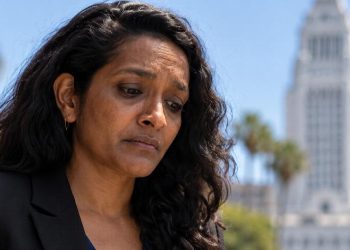
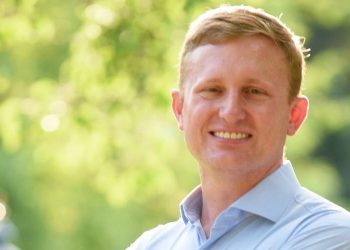
The most closely watched contest came in Illinois’ 9th Congressional District, where 26-year-old progressive activist and influencer Kat Abughazaleh sought to replace the retiring Rep. Jan Schakowsky. Abughazaleh campaigned on an aggressive platform that included a wealth tax and strong criticism of U.S. policy toward Israel, earning endorsements from Tlaib and Omar. She fell short against Daniel Biss, the mayor of Evanston and a former state legislator, who positioned himself as a pragmatic progressive focused on local issues like climate policy and building regulations. Biss’s win signaled that even in a safe Democratic seat, voters preferred experience and moderation over ideological purity.
Similar patterns emerged elsewhere in the state. In a bid for a congressional seat, state Sen. Robert Peters—a progressive who had championed the end of cash bail and minimum wage increases—raised over $1.1 million but lost to Cook County Commissioner Donna Miller. Peters had backing from Sen. Bernie Sanders and Sen. Elizabeth Warren. In the 7th District, activist Anthony Driver Jr., endorsed by Rep. Pramila Jayapal and the Congressional Progressive Caucus, was defeated by establishment figure La Shawn Ford. Tech entrepreneur Junaid Ahmed, who emphasized Gaza self-determination and universal healthcare and received support from Ocasio-Cortez, Jayapal, and Warren, also came up short.
Collectively, these Squad-aligned candidates raised around $5.7 million, yet none advanced to the general election. The defeats came despite the energy from progressive groups and the national spotlight on their causes. Instead, mainstream Democrats prevailed, advancing to face Republicans in November. Even in cases where winners like Biss held progressive views on certain issues, the results favored candidates seen as more attuned to winning broad support rather than energizing a narrow base.
Democratic strategist James Carville dismissed notions of progressive momentum, pointing out that only about 15% of the party identifies as progressive and that they rarely exceed that share in primaries. He referenced a recent New York race where a progressive secured just over 50% as evidence against any sweeping national shift. Liam Kerr of Welcome PAC described the Illinois results as proof that “the noise machine around far-left candidates rarely translates into actual votes,” with voters prioritizing winning over ideological performance.
Jim Kessler of the Third Way think tank called the outcomes a “cold shower to the progressive fringe,” emphasizing that every winner was a mainstream Democrat. He argued that Democrats must continually relearn the lesson that mainstream approaches beat extreme ones. On the other side, Adam Green of the Progressive Change Campaign Committee contended that the debate is not about the appeal of progressive economic policies but about whether candidates who truly champion them can overcome opposition from powerful industries funding more compliant alternatives.
Some observers noted nuance in the results. Michael Ceraso, a veteran of the 2016 Sanders campaign, pointed out that winners like Biss and those backed by Illinois Gov. JB Pritzker—who has advanced minimum wage hikes, ended sub-minimum wages for disabled workers, and protected reproductive rights—represent real progress. The governor’s support for Lt. Gov. Juliana Stratton in her successful primary further illustrated that progressive policy gains can occur without embracing the most confrontational candidates.
These Illinois primaries fit into a broader pattern of Democratic infighting visible in other blue areas. In recent cycles, progressive insurgents have occasionally prevailed but often struggle against well-funded establishment defenses or external groups like AIPAC, which targeted several of these candidates over their stances on Israel. The results do not erase progressive influence—policies on wages, climate, and social issues continue to advance—but they do expose limits to the Squad-style approach in even the most favorable terrain.
Voters in deep-blue Illinois chose moderation over revolution, at least in these contests. Whether this signals a durable shift or a temporary correction remains to be seen, but the message is unmistakable: in the battle for the Democratic Party’s future, the center still holds significant sway. As the party looks toward November and beyond, the tension between energizing the base and winning elections will only intensify.