
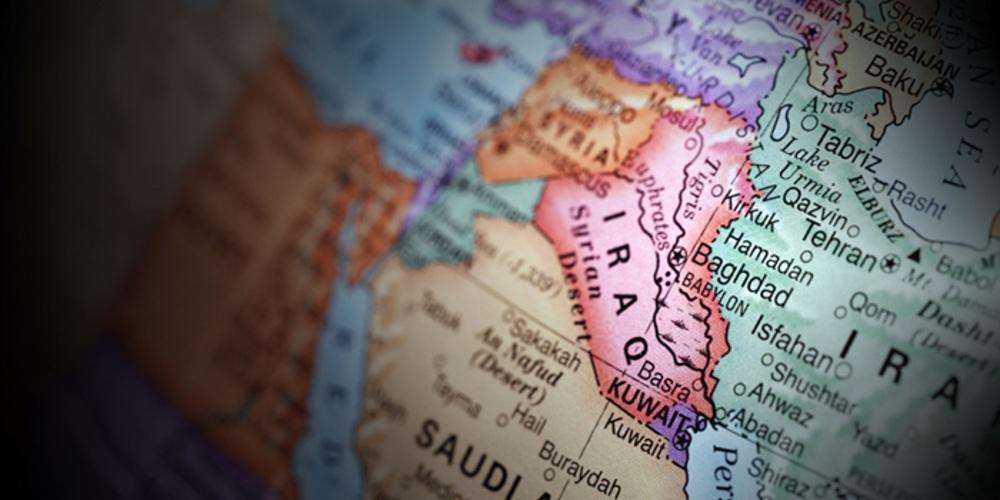
(Natural News)—Baghdad and Ankara are on the verge of extending a pipeline agreement that predates the Islamic Republic of Iran’s current standoff with the West by nearly five decades. Turkish Energy Minister Alparslan Bayraktar announced on July 9 that the two nations have nearly finalized a one-year renewal of the Iraq-Turkiye Crude Oil Pipeline Agreement, first signed in 1973 and set to lapse on July 27.
Iraq does depend heavily on Hormuz for shipping crude out of its southern port of Basra, and with that route badly disrupted, Baghdad has indeed leaned harder on the northern pipeline and even started trucking oil overland to reach alternative markets. But this particular agreement is not new, and it was not created because of Hormuz chaos. It is a fifty-three-year-old bilateral contract reaching its scheduled renewal date, the same kind of routine paperwork that has kept oil moving between these two nations through wars, sanctions, and internal Iraqi political disputes.
-
- Turkiye and Iraq are finalizing a one-year extension of the 1973 Iraq-Turkiye Crude Oil Pipeline Agreement, due to expire July 27.
-
- The pipeline moves crude from Kirkuk to Turkiye’s Mediterranean port of Ceyhan, historically one of Iraq’s primary northern export routes.
-
- The line sat idle for roughly two and a half years after a 2023 international arbitration ruling ordered Turkiye to pay Iraq $1.5 billion over unauthorized Kurdish exports between 2014 and 2018.
-
- Flows resumed only after Baghdad, Ankara, and Kurdish regional officials in Erbil struck a new arrangement.
-
- Turkish Energy Minister Alparslan Bayraktar met Iraqi Oil Minister Basim Mohammed Khudair and Prime Minister Ali al-Zaidi in Baghdad this week to advance the extension.
-
- The renewal is unfolding alongside separate turmoil in the Strait of Hormuz, but the two situations have distinct, largely unrelated origins.
A pipeline forged in 1973
The Iraq-Turkiye Crude Oil Pipeline has operated, on and off, since the two countries first signed their agreement in 1973, long before oil tankers became hostage to modern geopolitics in the Gulf. The pipeline runs from the oil fields around Kirkuk in northern Iraq to the Turkish port of Ceyhan on the eastern Mediterranean, giving landlocked Iraqi crude a route to international markets that bypasses the Gulf entirely. That geography is precisely why the corridor keeps resurfacing in the news, not because it was built in response to any single crisis, but because it offers Baghdad an alternative whenever its southern routes through Basra and the Gulf become unreliable.
The most recent disruption to the pipeline had nothing to do with Iran. In 2014, Kurdish regional leader Masoud Barzani directed Peshmerga forces to seize the oil-rich city of Kirkuk, then began exporting crude through a separate pipeline built with Turkish cooperation, sidestepping the Baghdad-controlled export system entirely. The Iraqi federal government objected, and the dispute eventually landed before the Paris-based International Chamber of Commerce, which ruled in February 2023 that the Kurdish exports violated the original 1973 agreement. Turkiye was ordered to pay $1.5 billion in damages, a bill Ankara initially refused, and the pipeline sat dark for roughly two and a half years while the two governments worked toward a resolution. Exports resumed only in late 2025, after Baghdad, Ankara, and Kurdish officials in Erbil hammered out new terms, a reminder that pipeline politics in this region are shaped as much by internal Iraqi power struggles as by any outside actor.
Renewal talks proceed on their own timeline
Bayraktar traveled to Baghdad this week to push the extension across the finish line, telling reporters, “We have brought the agreement that will cover the next 12 months to the final stage. We aim to sign it in the coming days.” He met with Iraqi Oil Minister Basim Mohammed Khudair to discuss broader oil and gas cooperation, and separately sat down with Iraqi Prime Minister Ali al-Zaidi, whose government has been pressing Turkiye to deepen investment ties beyond energy, including in agriculture.
It is tempting, given the current backdrop of Iranian threats to shipping in the Strait of Hormuz, to read every Iraqi energy maneuver as a defensive reaction to that crisis. There is some truth in the timing. Iraq relies on Gulf tanker traffic through Hormuz for the bulk of its exports, and with that route badly disrupted, Baghdad has leaned harder on the northern Kirkuk-Ceyhan corridor and even begun trucking oil overland to alternative markets. But the underlying agreement being renewed this month is not a product of that emergency. It is a routine, decades-old bilateral contract reaching its scheduled expiration, one that has weathered wars, sanctions, and Kurdish secession disputes long before the current Hormuz standoff began. Conflating the two risks obscuring a more useful story, one about how fragile and improvised Iraq’s energy independence really is, propped up by an aging pipeline and a neighbor’s goodwill rather than any coherent national strategy of its own.
Sources include: