Darline Graham may go down as the most baffling Republican nominee of the 2026 midterms. The only reason she was put forward is that she was a dead senator’s sibling. She didn’t seem to have much in the way of views or motivation. She should never have gotten the endorsement, and everyone who had anything to do with that decision should have no role in the 2028 election.
Some people are still defending this train wreck. They shouldn’t. Daniel Greenfield at FrontPage Magazine has the right of it: there was no reason to run her except a shared last name and a presumed incumbency that was more of a minus than a plus in a change election.
She represented nothing. That’s the opposite of what MAGA is supposed to be. The old establishment ran candidates because they had connections. The point of the movement was to stop doing that.
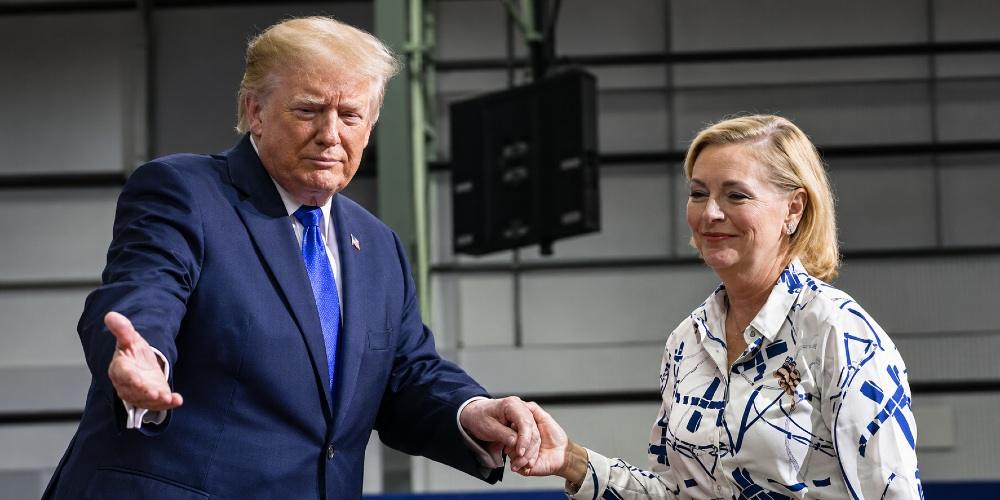
Lindsey Graham died suddenly on July 11. Governor Henry McMaster appointed his sister to finish the term at President Trump’s request. President Trump then told her to run, posting “RUN, DARLINE, RUN!” and promising his complete and total endorsement.
She entered a crowded special primary, finished first with less than a third of the vote, then squeaked through a runoff against Ralph Norman. Even with a massive war chest carried over from her brother and heavy outside help, most Republican voters in South Carolina never wanted her. If Mark Sanford hadn’t jumped in, she might not have cleared the primary at all.
In the general she lost to Democrat Annie Andrews, roughly 51 percent to 47 percent. A seat Republicans had held for nearly three decades flipped in a state Trump carried by nearly 18 points two years earlier. Andrews is a pediatrician who previously ran for the House and spent years as a gun-control activist. South Carolina voters preferred her to the sister of the late senator who admitted during a primary debate that national security was “not my thing.”
Greenfield notes that Ralph Norman might well have lost the general too, given the leftward wave in certain states. Who knows? The larger issue is that there was never a substantive case for Darline Graham. She was a political novice who had worked in state agencies, including the Commission for the Blind. That background is respectable. It is not a qualification for the United States Senate in a year when voters wanted fighters, not placeholders.
The appointment itself was understandable as a short-term gesture. Turning it into a full-term candidacy on the strength of a last name and a presidential tweet was not.
But the LORD said unto Samuel, Look not on his countenance, or on the height of his stature; because I have refused him: for the LORD seeth not as man seeth; for man looketh on the outward appearance, but the LORD looketh on the heart.
The outward appearance here was the Graham name and the Trump endorsement. The heart of the matter was that she offered no clear agenda beyond carrying on her brother’s legacy and saying the right things about life and women’s sports when pressed. Voters noticed. So did the base that refused to unify behind her. Trump campaigned hard in the state; it wasn’t enough.
This was not an isolated failure. There were other weak Republican candidates in 2026. Democrats can run almost anyone and still get carried by a wave in certain places. That doesn’t excuse our side from fielding people who can’t explain basic issues and whose main credential is blood relation.
If we can’t admit Darline Graham was a mistake, we will repeat it in 2028. Fresh blood means actual fresh blood, not relatives, siblings, or the same people who just lost. A change election requires a credible promise of change.
South Carolina deserved better than a reluctant placeholder. The rest of the country will deserve better in two years. Admitting the obvious is the first step.