Gangs controlled Haiti’s main soccer stadium for two years. When joint Haitian and Salvadoran forces finally took it back this week, they found human skulls inside. Salvadoran President Nayib Bukele posted the video.
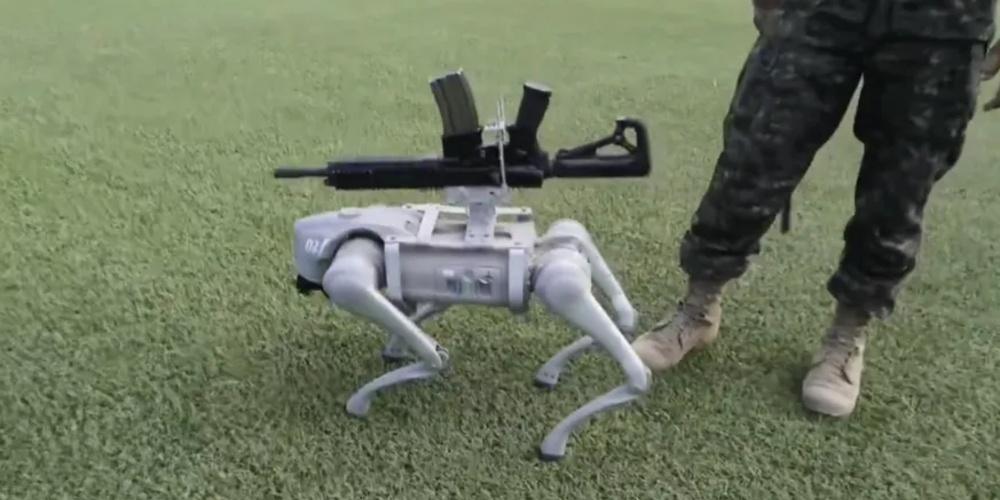
Rifle-mounted robot dogs walked the hallways and climbed the stairs while troops secured the ground. That is what happens when a country is left to the mercy of armed criminals and someone finally decides to do something about it.
According to Fox News, the operation at Sylvio Cator Stadium in Port-au-Prince involved the Haitian National Police, the Haitian Armed Forces, a government task force, and Salvadoran Special Forces under a bilateral agreement. Bukele wrote that the forces “successfully took control of Sylvio Cator Stadium and secured it.”
He added that several human skulls were found during the clearance. The stadium will now serve as an operational base so forces can push deeper into gang-held territory.
“We now have the upper hand on the ground,” he said. “Those who choose to stay and fight our forces will have to face the consequences.”
Breitbart and other reports confirm the same grim details. The stadium, named for Haitian Olympic long-jumper Sylvio Cator and home of the national team Les Grenadiers, had been under gang control since roughly February 2024. Haiti’s squad was forced to play World Cup qualifiers abroad. Residents in the capital have lived with the results of that vacuum for years: massacres, kidnappings, and bodies left where they fall.
The robot dogs are commercial Chinese Unitree Go2 models, modified with rifle mounts. Videos show the white four-legged machines moving through corridors and up stairs with assault rifles fixed to their backs. No footage released so far shows them firing. Their role appears to be reconnaissance and presence while human troops clear rooms.
El Salvador has used the same platforms in domestic operations before. The rifles look like the Israeli-made AR-style weapons the Salvadoran military adopted years ago. The hardware is not exotic. The willingness to deploy it is.
This is not a UN peacekeeping exercise. After four Salvadoran aviation technicians disappeared following an ambush on October 18, Bukele sent roughly 2,500 troops, armored vehicles, and now these platforms. Haitian police statements indicate they recovered the stadium and then handed control to the Salvadoran contingent to hold it.
Earlier in the week Salvadoran forces struck the headquarters of the 400 Mawozo gang. The pattern is consistent: identify the stronghold, destroy or seize it, and establish a base. The Daily Caller noted that Haitian authorities described taking “full control” before transferring security of the site.
Haiti’s gang problem is not a mystery. Armed groups have held large parts of Port-au-Prince for years. International missions have come and gone with limited lasting effect. Kidnappings, sexual violence, and executions continue.
The discovery of skulls inside a national stadium is not an anomaly. It is the predictable outcome when the state withdraws and criminals fill the space. “The wicked shall be turned into hell, and all the nations that forget God,” the psalmist wrote. The skulls are evidence of what that forgetting looks like on the ground.
Bukele’s approach draws the usual criticism from the same quarters that spent years managing decline in El Salvador before his crackdown. Critics prefer process over results. Haitians living under gang rule have had plenty of process. They have had less security. The robot dogs are secondary. The primary fact is that a government decided the stadium would no longer be a gang base and acted.
Whether the offensive continues and whether the missing Salvadoran personnel are recovered remains to be seen. For the moment, the stadium is no longer under the control of the people who left human remains behind.
That is a start. The rest of the capital is still waiting.