The lights stayed on and the planes eventually flew, but a string of technical failures across banks, airlines, Microsoft services and even a classified NSA network has a cybersecurity specialist sounding a sharp alarm. These were not confirmed attacks, federal officials insist. Yet the way they cascaded reveals just how brittle the systems Americans rely on every day have become, and how carefully foreign adversaries are watching.
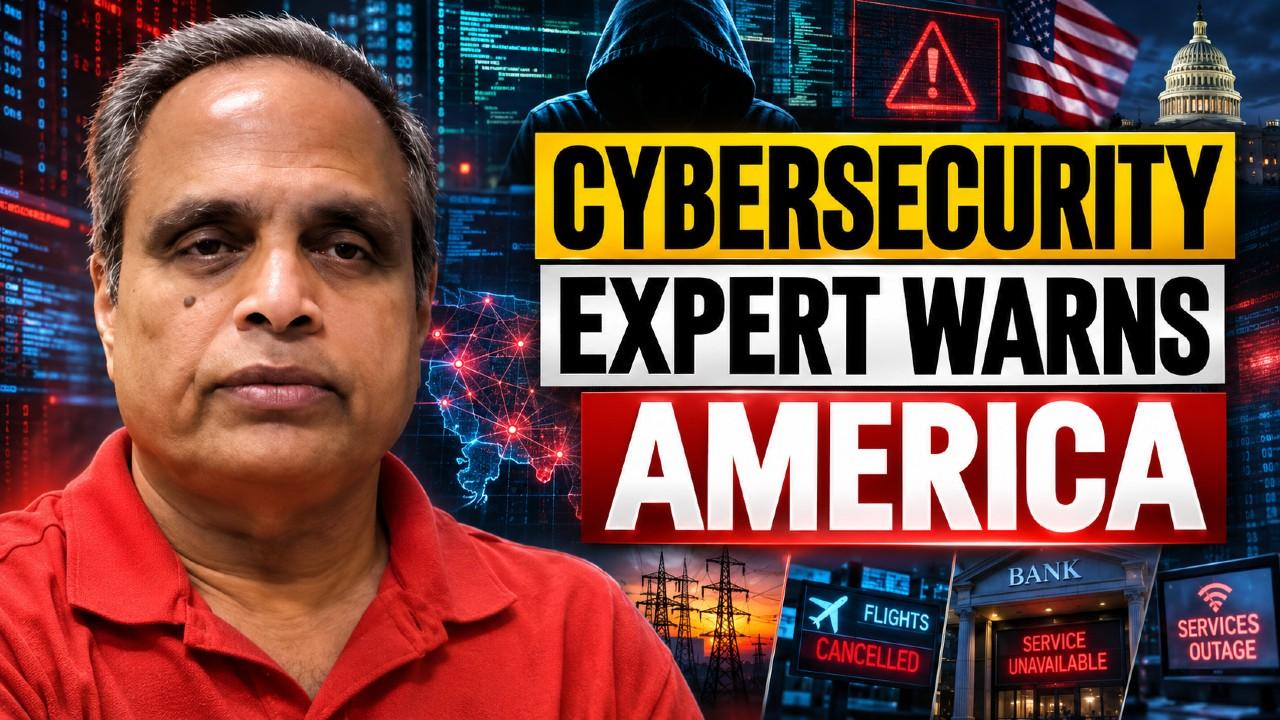
Dr. Ram Dantu, founding director of the University of North Texas Center for Cyber and AI Security and a former Cisco director, told Fox News that the recent disruptions could easily stem from congestion or ordinary software problems. Still, he refused to rule anything out.
“Nobody can guarantee this is not a cyberattack,” he said. Malicious code can sit quietly inside networks for months or years before an adversary activates it remotely. “If there is a foreign actor, they will keep quiet for a long period of time, and then slowly they will release, and remotely they will be activated.”
That is the real concern. Dantu singled out the electric grid, water systems, oil and natural gas pipelines, telecommunications networks and financial institutions. A successful strike against any of them would not merely inconvenience people. It could cascade into real hardship and chaos.
“Cyberattack can be massive on real critical infrastructure,” he warned. “These are very, very critical systems.”
The recent outages, in his view, also hand adversaries a free map. “I think we are showing our weakness, and I am really concerned about it.”
He noted something else that struck him as odd: major upgrades happening in the middle of the day. Engineers normally schedule such work overnight and in careful stages. Daytime rollouts at noon or one in the afternoon are rare. “I think that is strange. That’s what caught my eye.”
Secretary of State Marco Rubio and Director of National Intelligence Jay Clayton have both stated that investigators found no evidence the incidents are connected or that any foreign government, criminal group or hacker was involved. Homeland Security officials have likewise described them as unrelated technical issues. The FAA’s Friday nationwide ground stop, which stranded hundreds of thousands of travelers, was traced to routers flooding an aging network during an upgrade from copper to fiber.
Microsoft’s outage stemmed from a latent defect that surfaced under load. JPMorgan Chase attributed its transaction slowdowns to a software bug in on-premise hardware. The NSA’s classified internal network suffered a temporary degradation during routine maintenance.
Those explanations may well be accurate. They do not erase the larger problem. America’s critical infrastructure is aging, under-hardened and already the target of sustained foreign efforts. Chinese state-sponsored groups such as Volt Typhoon have spent years quietly embedding themselves inside energy providers, water systems, telecommunications and transportation networks.
Federal agencies have assessed that the goal is not merely spying but prepositioning the ability to disrupt essential services if conflict erupts, particularly over Taiwan. Iranian-linked actors have similarly probed and disrupted water utilities by targeting exposed industrial controllers.
A single misconfigured router or latent software defect can ground planes or slow banking nationwide. An adversary that has already mapped those seams and planted access can do far worse on purpose. The outages of recent days function as an unplanned stress test, and the results are not reassuring.
“Except the Lord keep the city, the watchman waketh but in vain.” The verse is not a call to fatalism. It is a reminder that vigilance, investment and competent stewardship matter.
Officials can declare these particular failures accidental. They cannot declare the underlying vulnerabilities imaginary. Adversaries do not need a perfect conspiracy when the systems themselves keep demonstrating how little pressure it takes to make them stumble. Americans deserve infrastructure that does not require an act of God to stay online.