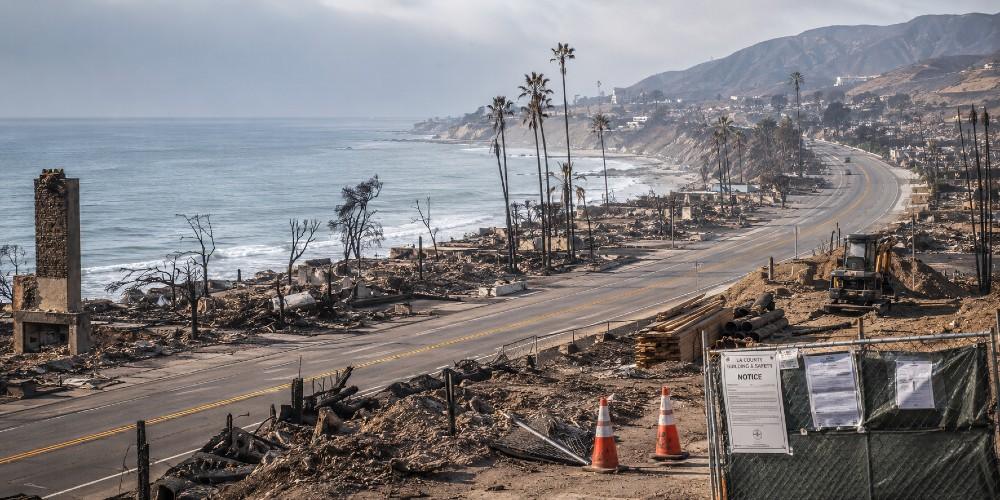
Drive the Pacific Coast Highway through Malibu right now and you will not find paradise. You will find ruins. Charred foundations. Empty lots where multimillion-dollar beach houses once stood. Eighteen months after the Palisades Fire ripped through the coast, the place still looks like Pompeii after the volcano. And the people who lived there are starting to wonder if California will ever let them come home.
Only a handful of homes along the iconic stretch have broken ground. Out of more than a thousand permits issued for damage, repairs, and debris, just 88 cover new construction. Sixty-one homes are actually being rebuilt. The rest of the beach sits empty while owners stare at the math and walk away.
Matt Greenberg was one of the first to sell. He bought a fixer-upper on the water in 2023, ready to turn it into the dream. Then he met the city. It took more than a year just to get a remodel permit. The approval finally landed the same morning the fire started. That night his house was gone.
“The process to get anything done in the city is just an absolute nightmare. Everything’s slow, expensive, and it takes awhile.”
He had no interest in running that gauntlet again. So he sold. Others are following. Danny Smith lost his beachfront place and is now running for city council. He calls the official numbers “misleading.”
“It’s obvious to the public, you drive in from Malibu to the East and it looks like Pompeii and it’s going to continue to look like death for decades if we don’t speed things up.”
Smith sold too. Uncertainties around septics, sewers, and sky-high costs made the decision for him. He gives Governor Gavin Newsom some credit for the early push to streamline Coastal Commission rules and waive certain environmental reviews. Then the urgency vanished.
“I don’t know where his attention is these days. I think he has bigger political ambitions. We’re still here, and we are not anywhere close to recovery.”
That is the California story in miniature. Flashy emergency declarations when the cameras are rolling. Then the bureaucrats settle back into their chairs and the process grinds on.
The city of Malibu points to its disaster rebuild ordinances, online portals, and dedicated staff. Smith answers that none of it would exist without community outrage forcing their hand.
Carl Randall is one of the few charging ahead. His family has owned the same beach property since 1966. He is building for about $7 million. Most of his neighbors cannot match that number because they were stuck on the California FAIR Plan, the state’s insurer of last resort, which caps coverage at $3 million.
Private carriers fled years ago under the weight of regulations and Proposition 103 rate controls. The result is underinsurance on a massive scale.
Randall calls the permitting fight a battle. Coastal engineers, structural engineers, septic engineers, geotechnical reports, public works reviews. He still managed to cut the usual five-to-six-year timeline down to roughly one year.
Progress, of a sort. Now he stands on the narrow strip beside the highway every day, protecting his crew from traffic while they drill caissons into the earth. He asked the city to push the road back ten feet for safety. They gave him five.
Glenn Dexter’s father built their place in 1959 for $35,000. Today the cost of replacing the seawall alone is enough to make a man think twice about staying. Seawalls can only be worked in narrow seasonal windows. Miss one and you wait another year.
This is what progressive governance produces. Layers of coastal rules, environmental reviews, and insurance mandates that drive private capital out and leave ordinary people—yes, even wealthy ones—trapped. One year after the fires, construction had begun on fewer than 4 percent of destroyed buildings across the broader Los Angeles burn zones.
The same state that lectures the rest of the country about equity cannot clear a path for its own citizens to rebuild after a disaster. The ultra-wealthy will buy the empty lots at a discount. The full-time residents who actually made Malibu a community will be priced or regulated out.
Scripture speaks to the work of restoration. “And they that shall be of thee shall build the old waste places: thou shalt raise up the foundations of many generations; and thou shalt be called, The repairer of the breach, The restorer of paths to dwell in” (Isaiah 58:12).
God calls His people to repair what is broken. California’s political class seems determined to keep the breaches open.
Smith believes a real sewer system would help. Residents will vote later this fall on an assessment district. That is one practical step. The larger problem is deeper. As long as Sacramento and the coastal commissions treat property owners as subjects to be managed rather than free people with rights, the ruins will stay.
Malibu will remain a museum of ash and good intentions, a cautionary tale for every state that still thinks more regulation is the answer to every crisis.
The fire is long over. The government-made disaster continues.