 (DCNF)—Voters will cast ballots on several ballot initiatives addressing voter identification, abortion, data centers and other issues in the 2026 election cycle.
More than 140 total measures across 40 states plan to touch on some of the most hot-button issues in politics. Several states ranging from Virginia to California are asking voters to decide whether to amend their state constitutions on elections and social issues.
Voters in Idaho, Virginia and Missouri will decide whether to keep or amend their states’ abortion laws. Measures in Virginia and Nevada would enshrine abortion legalization in the states’ constitutions before the point of fetal viability, which happens around 24 weeks of pregnancy.
Question 1 of Virginia’s ballot initiatives would also prevent any laws restricting “personal decisions” about prenatal care, birth control, or postpartum treatment, according to the Virginia Department of Elections. In January, Democratic Virginia state lawmakers advanced a constitutional amendment on abortion rights to appear on the November ballot.
Bishop Michael Burbidge of the Diocese of Arlington issued a Sept. 12 letter urging Virginians to join the “Catholics Vote No” campaign and oppose Ballot Questions 1 and 2. The second initiative in Virginia would remove a constitutional ban on same-sex marriage in the event that the Supreme Court overturned Obergefell v. Hodges, which deemed state bans on same-sex marriage unconstitutional.
“[Ballot Question 1] threatens the health and safety of mothers and would allow for abortions targeting healthy babies all the way up to birth,” Burbidge’s letter said. “The amendment extends this so-called right even to minors. It would remove the role of parents concerning life-altering and irreversible decisions for their minor daughters.“
“The proposed amendment is extreme. It is unnecessary. And it is wrong,” the letter continues.
Democratic Virginia Gov. Abigail Spanberger and Democratic Virginia Attorney General Jay Jones expressed support for the two proposed amendments. Catholic parishes across the state, including the Basilica of St. Mary in Alexandria, Virginia, have registered parishioners to vote as part of the “Catholics Say No” campaign.
There are over 693,000 registered Catholic voters in the Dioceses of Arlington and Richmond, according to the Virginia Catholic Conference.
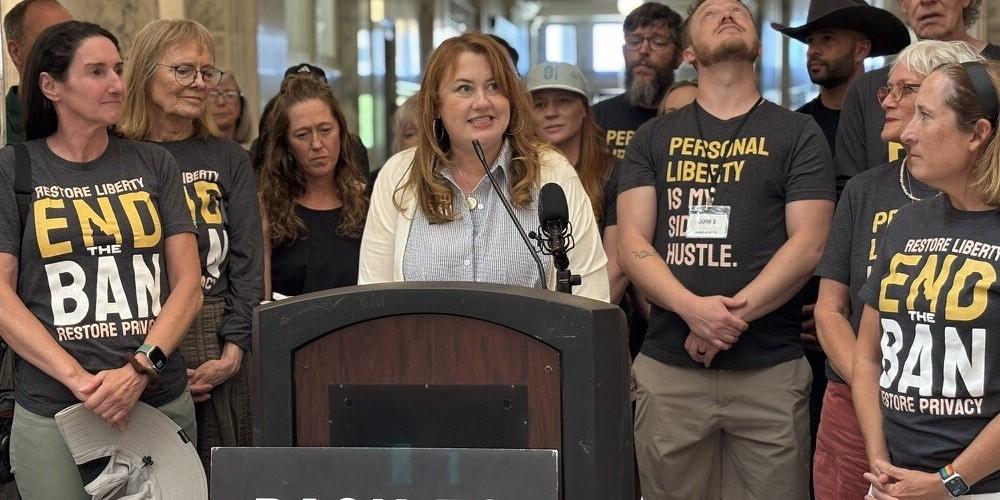
Another ballot initiative in Idaho would overturn the state’s near-total abortion ban and establish a “right” for a woman to have an abortion until viability. Idaho passed legislation in 2020 that outlawed abortions except in cases of rape, incest and life of the mother. Performing abortions outside of those circumstances is punishable by two to five years in prison.
In Missouri, Amendment 3 would repeal the 2024 abortion rights amendment and ban nearly all abortions and trans-related surgeries for minors.
California’s state Legislature introduced Proposition 40, which would institute a one-time 5% tax on the wealth of billionaires to raise tens of billions in revenue to address education services, health, nutrition and other services, according to the California Budget & Policy Center. There is a high degree of uncertainty in estimating the potential revenue from this measure, though the Legislative Analyst’s Office estimated that it would likely raise “tens of millions” of dollars in the near term. It could reduce state income tax collections by roughly $1 billion per year.
The billionaire tax intends to provide financial assistance following the federal and state-level cuts to healthcare, food assistance and K-14 public education programs, according to the California Budget & Policy Center. It would create a special fund, the 2026 Billionaire Tax Reserve Fund, to hold the revenue.
Some individuals expressed concerns about the measure being a one-time tax that would only be available for a few years, according to the California Budget & Policy Center. It would not be available to support other state services and there is uncertainty over how billionaires would respond to the tax.
In Florida, Amendment 3 would add a constitutional amendment to increase the homestead tax exemption for non-school taxes to $150,000 in 2027 and $250,000 in 2028, according to Ballotpedia. It would give new Florida residents a smaller initial exemption until they have lived in the state for five years and restrict counties and municipalities to spending property tax revenue on public safety, education, natural resource projects and infrastructure.
A homestead exemption allows homeowners to exempt a portion of its assessed value from property taxes, reducing the amount they owe.
Republican Florida Gov. Ron DeSantis called for a special legislative session in June to consider the constitutional amendment, according to Ballotpedia.
“Property tax revenue collected by local governments has nearly doubled in the past seven years and is expected to reach an astounding $83 billion by 2032,” DeSantis said. “Florida homeowners need relief. Now is the time to stand up for taxpayers, enact a historic reform, and save the home of every Floridian.”
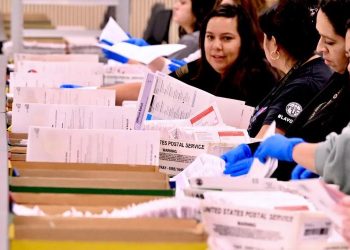
Voters in more than 15 states will decide on measures regarding voting, voter identification and citizenship. Arizona, Arkansas, Kansas, West Virginia and South Dakota are considering amending their constitutions to say that only U.S. citizens could vote in elections.
Arizona, California, Colorado, Nevada, North Carolina and Ohio will consider amendments requiring specific identification from voters when they vote in-person or by mail. These moves followed the U.S. Senate’s inability to pass the Safeguard American Voter Eligibility (SAVE) America Act, which would require voters to provide proof of U.S. citizenship to register to vote and present photo identification at the voting booth.
A Fox News poll from July found that the vast majority of Americans, 83%, support identification to register to vote and 77% support it to vote.
Massachusetts voters will consider a new statute to allow same-day voter registration. The state currently requires residents to register to vote at least ten days before Election Day, which some have argued “disenfranchises thousands of voters,” according to MassVote.
Supporters of the amendment argue that same-day registration increases voter turnout, helps election officials and is safe to implement through modern technology. Opponents expressed concerns that verifying a voter’s eligibility could cause disruption and confusion on Election Day.
Democratic Massachusetts Gov. Maura Healey endorsed the initiative, arguing that registration should be “easy and automatic,” according to MassLive.
Alaskans will decide whether to repeal a previous ballot measure that enacted ranked-choice voting in 2020 and end the state’s open primary system.
California, Colorado and Nevada would expand laws requiring voters to show identification before voting. Arizona, Ohio and North Carolina would add voter ID requirements into their state constitutions.
In Virginia, voters will consider a constitutional amendment restoring voting rights for convicted felons upon their release from prison. The state is currently one of the hardest states for someone with a felony conviction to earn back their right to vote.
At least 39 data center measures will be on the ballot in eight states. Ohio municipalities will vote on 21 measures related to data centers, including nine petitions that would ban data centers that draw over 25 megawatts of energy per month, according to The Ohio Capital Journal. Other proposals would require hyper-scale data center developers receiving tax incentives to provide financial guarantees.
Two measures in Venice, Illinois, and Nameoki, Illinois, would advise data center construction and operation in the township, according to Ballotpedia. One initiative in Maine would establish a six-month moratorium on applications for new or expanded data centers.
Data centers drove up the costs of electricity, rising 13% in Virginia, 16% in Illinois and 12% in Ohio over a one-year time frame, according to CNBC. Data center construction rose 57% from July 2025 to July while energy costs rose.
Natural gas consumption used to generate electricity for U.S. data centers is projected to increase by 15 billion cubic feet per day through 2035, putting U.S. data centers on track to consume more natural gas than nearly every other country. A New Jersey data center spilled an estimated 5,000 gallons of No. 2 diesel fuel into a nearby creek in September.
Some initiatives would address redistricting, which became a hot button issue in the 2026 midterm cycle. Voters in Missouri will consider whether to repeal new congressional districts passed by the Republican-controlled state Legislature, while an initiative in Colorado would make it harder to redraw congressional districts by requiring any such maps in 2028 to follow a more extensive approval process.
Washington, Arizona, Nebraska and Colorado will vote on whether to ban trans-identifying athletes from participating on sports teams that match their gender identity. Washington and Nebraska’s ballot measures would only apply for men competing on women’s sports, while Arizona’s and Colorado’s would apply to both male and female teams.
Another initiative in Colorado would ban sex change operations and other procedures for minors.
Some states would address education, including in Alabama, which has one proposal that would require public schools to play the national anthem at least once a year. Another would require schools to recite the Pledge of Allegiance daily and mandate school boards to adopt policies that allow student-led prayer.
Arizona and Wisconsin have measures that would ban affirmative action in schools and state government agencies. The Arizona measure, Proposition 142, would amend the state constitution to expand restrictions on preferential treatment, discrimination and diversity policies across the entire state government.
The Prohibit Government Discrimination or Preferential Treatment Amendment in Wisconsin would “prohibit any governmental entity from discriminating or granting preferential treatment based on race, sex, color, ethnicity, or national origin in public employment, public education, public contracting, or public administration,” according to Ballotpedia.
The Supreme Court ruled against race-based admissions in June 2023.
All content created by the Daily Caller News Foundation, an independent and nonpartisan newswire service, is available without charge to any legitimate news publisher that can provide a large audience. All republished articles must include our logo, our reporter’s byline and their DCNF affiliation. For any questions about our guidelines or partnering with us, please contact [email protected].