(RealClearInvestigations)—When the Federal Aviation Administration reinforced cockpit doors after the 9/11 hijackings, it turned flight decks into fortresses to lock out terrorists. But what if a terrorist is already inside?
That question has new urgency following the harrowing Sept. 30 attack aboard a FlyDubai flight in which a Muslim extremist (Islamist) pilot was forcefully stopped by a heroic pilot and brave passengers from crashing a plane bound for Israel.
Former aviation security officials say the FAA needs to reassess threats inside cockpits and the measures intended to counter them. They say this review is especially urgent because the agency has made insider threats to the cockpit more likely by recently forcing airlines to add a secondary barrier to the cockpit in the form of a metal gate on new planes.
Experts say the added security, while well-intentioned, could backfire following al-Qaeda’s call last month for Islamist pilots to carry out more suicide attacks inside cockpits and for followers to infiltrate the ranks of pilots. Al-Qaeda has reestablished terror training camps in Afghanistan, along with recruiting and propaganda organs, echoing its pre-9/11 potency.
Enhanced security measures designed to lock out threats could merely lock in an attacker. At the same time, the FAA is adding more people to the flight deck under a new training program that lets air traffic controllers sit as passengers in cockpit jump seats to observe operations up close, potentially opening up more security issues with relative “strangers” in the cockpit. All major U.S. carriers have agreed to participate in the program, which will vet controllers at the airport prior to takeoff but won’t screen them in advance for extremist views.
Aviation security experts also say airlines must do more to identify pilots who may hold extremist views or show signs of mental illness. At least two U.S.-based Islamist pilots have been suspended in the wake of the FlyDubai incident.
“Pilots who have openly espoused and supported terrorists should be grounded as unstable,” said former airline executive Michael Boyd, president of Boyd Group International, an aviation consulting firm, in an interview with RealClearInvestigations. “Anybody who supports clear terrorism should be grounded; but of course, that gets muddy in the realm of free speech.”
Weak vetting systems
Suicide by aircraft has long been a rare but concerning issue. Most documented cases have involved private planes, not commercial carriers. Mentally ill people – including the German copilot who killed himself and 149 others on board when he locked the captain, who had gone to the bathroom, out of the cockpit and crashed a flight into the Alps in 2015 – have long accounted for most cases. But experts say a disproportionate number of such tragedies involving major airliners have involved Muslim pilots, most of whom have expressed extremist views.
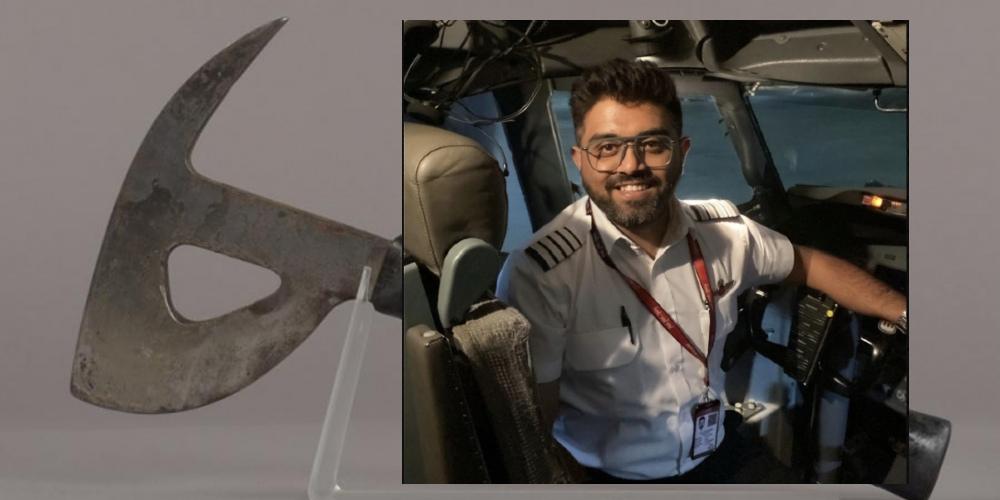
During the FlyDubai attack, brave passengers were able to enter the cockpit and stop Omani copilot Hamam al-Hammami, an al-Qaeda supporter, who had attacked the flight’s captain with an ax, from taking over the controls, thus saving the lives of the 174 mostly Israeli passengers on board. Gaining access to the cockpit – which the captain managed to unlock before collapsing – was the only reason the terrorist didn’t succeed in crashing the jet into the Tel Aviv airport as intended after he disabled the captain.
While non-Muslims historically have been responsible for some cases of suicide pilots intentionally downing major airliners, three of the four cases directly linked to terror have involved Islamist pilots (9/11 is not included because it was a hijacking). Experts caution that the number is almost certainly higher because comprehensive data on the phenomenon is thin. Although most of the pilot-orchestrated terror attacks have taken place overseas, there is growing concern that American pilots aligned with terrorist groups like Hamas could crash airliners into U.S. cities.
Yet the FAA and Homeland Security currently have no system for vetting such sympathizers as insider threats, and are leaving it up to airlines to police pilots. Even Israel’s Transport Ministry relied on Arab countries and their airlines to vet al-Hammami, whose long record of extremist views was overlooked.
Since the FlyDubai attack, United Airlines has grounded a Newark, N.J.-based pilot, Ibrahim Mossallam, after his social media posts praising the Oct. 7 Hamas attack were flagged. Israel recently barred another United Airlines pilot, Sina Amjadian, after he reportedly expressed support for Hezbollah and pledged loyalty to Iran’s Revolutionary Guard in his own social media posts. Amjadian, who is of Iranian descent, is based out of LAX and previously flew for FlyDubai.
Mossallam was a former official for the controversial Council on American-Islamic Relations, acting as CAIR-NY’s board chairman. He also served as a board member with American Muslims for Palestine, which is under federal investigation in connection with Hamas. CAIR did not respond to requests for comment.
Retired FAA special agent Brian Sullivan, who warned that Boston’s Logan International Airport was vulnerable to a terror attack months before 9/11, told RCI that relatively lax screening of pilots is a “major hole” in U.S. aviation security.
“Vetting obviously needs to be given a hard look if we are going to keep bad guys out of the cockpit,” Sullivan said.
The FAA and Homeland Security did not respond to RCI requests for comment. After the FlyDubai incident, the agencies issued official statements saying pilots must pass mental health evaluations, criminal background checks and security threat assessments, including cross-checking terrorist watchlists. Same for air traffic controllers, who will soon be joining pilots in the cockpit as jump-seat passengers as part of the FAA’s new flight deck training program.
However, the agencies do not monitor pilots’ or controllers’ social media for extremist posts or photos to help predict if a cleared pilot will go “rogue” and weaponize commercial aircraft to carry out a religiously or ideologically motivated attack.
Jihadi pilots
While the majority of Muslim pilots are not extremists, Sullivan said dismissing the threat over concerns about “Islamophobia” or ethnic profiling ignores the reality of al-Qaeda’s fatwa and the troubling history of jihadi pilots. He noted the FlyDubai incident is just one of several in which radical Muslim pilots have crashed or attempted to crash the planes they were flying.
In 1999, first officer Gameel al-Batouti seized control of EgyptAir Flight 990 while the captain was in the lavatory and crashed the plane into the waters off Nantucket while shouting, “Tawkalt ala Allah” (I rely on Allah) 11 times. More than 120 American and Canadian passengers perished.
In 2014, Malaysia Airlines Capt. Zaharie Ahmad Shah, a devout Muslim, was suspected of crashing his Boeing 777 into the Indian Ocean after plotting a course to the crash site on a flight simulator investigators found at his home. The alleged “rogue pilot” had also cut off radio contact and radar transponder transmissions before the jet and the 239 people aboard, most of them Chinese, perished. His motivation remains unclear.
In the Sept. 30 FlyDubai terrorist attack, al-Hammami ambushed and attacked the flight captain with an emergency axe after excusing himself to pray Islamic prayers. Two other Muslim pilots have reportedly been detained in connection with the plot.
“The latest incident raises serious questions about the risk entailed by both Muslim pilots and Muslim airlines operating in the United States,” said Daniel Greenfield, a counterterrorism expert and fellow at the David Horowitz Freedom Center.
He said the number of suicidal Islamic pilots is likely larger than reported.
“It’s unknown how many of the deliberate Muslim airline crashes were due to pilot terrorism because the Muslim countries involved tended to avoid any discussion of the motives involved,” Greenfield said. “Some of the crashes by Muslim pilots have been attributed to personal issues, ranging from workplace frustration to a failed love affair; while others, notably EgyptAir Flight 990, were falsely attributed to mechanical failure.”
That said, Muslims aren’t the only pilots who have flown suicide missions. In addition to the Germanwings pilot, for example, a Japan Airlines pilot in 1982 pushed the engine controls in reverse during approach to Tokyo and crashed into Tokyo Bay, killing 24 passengers after suffering a mental breakdown. Some observers have called for broader psychological testing of all pilots rather than narrowly focusing on extremist Muslims.
Cockpit insecurity
Others worry that the recent exodus of veteran pilots from the industry following COVID-related buyouts is contributing to cockpit insecurity. De facto diversity quotas have led to the recruitment of pilots who are potentially less qualified and experienced, but also less known, critics say.
“How well do we really know the people that have our lives in their hands?” said Capt. Chris Pohl, a senior Virgin Atlantic training captain. “We should ensure experienced operational captains remain at the heart of pilot selection.”
He argues that mass pilot retirements over the past decade due to a federally mandated retirement age of 65 have eroded peer-to-peer vetting that historically kept unstable pilots out of the cockpit.
“When I entered commercial flying, getting anywhere near a major airline’s cockpit generally required substantial experience. Several thousand hours were often expected and those hours created a track record,” Pohl said. “Most importantly, you developed a reputation. If somebody demonstrated poor judgment, a dangerous attitude or behavior that concerned other pilots, people often knew. Your reputation told them who you were.
“Today, a pilot can go directly from flying school to the right seat of an airliner with hundreds of hours, not thousands, with no employment history, just a license and exam results,” he added.
Finding red flags
Some aviation security experts suggest federal regulators enhance the vetting process by using artificial intelligence to monitor the postings of pilots on social media for extremist content. AI-driven social media vetting could flag terrorist sentiments that could indicate plans for a suicide mission.
FAA regulators are also having to grapple with the issue of the mandatory emergency axe stowed inside the cockpit after the FlyDubai terrorist used it as a weapon to attack and disable the captain. Some experts say its use should be reevaluated. They propose replacing it with less lethal tools, such as heavy-duty pry bars or cold-cutting saws that don’t produce sparks or flames.
“What they’ll come up with relative to the crash axe will be interesting since it will pit safety questions versus security questions,” Sullivan said.
The purpose of the axe is to allow pilots to hack their way out of the cockpit windows after a crash.
“The cockpit axe is a necessary safety item,” Boyd said. “And like the cockpit controls, a crackpot pilot could make nasty use of it.
“That comes with the territory where we cannot defend against them,” he added. “There’s no way we can assure cockpits are completely loon-proof.”
Still, the harrowing FlyDubai episode appears to have heightened the awareness of potential security risks among their pilots.
“Hopefully, this will serve as a wake-up call to those who fail to address known vulnerabilities,” Sullivan said. “We all know that aviation is still a viable terror target, and with Iran and other ongoing threats, this is certainly not the time to become lax.”