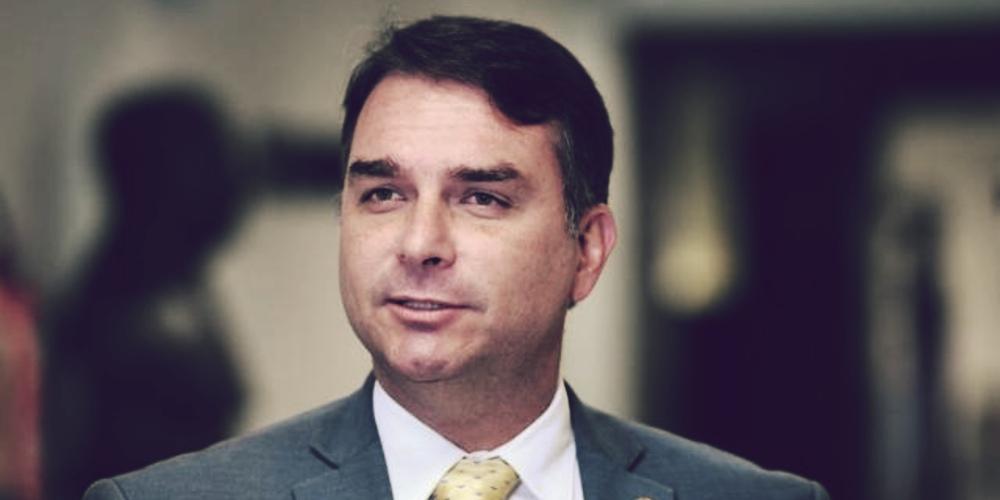
Once again, a major national election is tainted by the appearance of fraud. This one occurred in Brazil, where communist Luiz Inácio Lula da Silva (aka, “Lula”) claimed victory over Flávio Nantes Bolsonaro.
Over the course of his political career, Lula was implicated in several vote-buying scandals but managed to avoid prosecution. In 2017, he was finally convicted of numerous public corruption offenses — including bribery, money laundering, influence peddling, and obstruction of justice — and eventually sentenced to seventeen years in prison.
Lula’s communist and Marxist-globalist friends around the world — including Pope Francis, Noam Chomsky, Bernie Sanders, Ro Khanna, and the United Nations’ Human Rights Committee — painted Lula as a “political prisoner” and worked for years to secure his release. In 2021, Brazil’s Supreme Federal Court annulled Lula’s convictions (holding that the original court lacked jurisdiction and that Lula’s prosecution had been politically motivated) and ruled that all evidence used against him would be inadmissible in any future court proceedings.
Lula immediately declared his candidacy for president and won his third term in office in 2022 by defeating President Jair Messias Bolsonaro with 50.9% of the vote to Bolsonaro’s 49.1%. Bolsonaro’s supporters accused Lula and the courts of engaging in corruption and fraud as part of a scheme to install the criminally convicted communist in the presidency. Bolsonaro’s party eventually contested the election on the grounds that the internal logs of electronic voting machines showed irregularities and that the criminally convicted Lula was not eligible to have run for office in the first place.
Public riots against Lula’s election grew through December of 2022, and on January 8, 2023, thousands of Bolsonaro’s supporters stormed and ransacked the National Congress, the presidential office, and the Supreme Federal Court. Lula and his judicial allies used the incident to accuse Bolsonaro of plotting a coup d’état — exactly as Democrats had used the January 6, 2021, protest against election fraud at the Capitol in D.C. to accuse President Trump of “sedition” and “treason.”
Unlike the special treatment that Lula received for his numerous public corruption crimes, Bolsonaro was eventually convicted of “crimes against democracy” and sentenced to twenty-seven years in prison for supposedly engineering an “insurrection” against Lula’s government.
While Jair Messias Bolsonaro remains a prisoner, his son, Flávio Nantes Bolsonaro, challenged Lula for the presidency this year. In the first round of the election, held on October 4, Flávio Bolsonaro received 56.1 million votes (47%) to Lula’s 53.9 million votes (45%). All other presidential candidates received 9.3 million combined votes, and the majority of those votes went to conservative political candidates.
Because Bolsonaro did not reach the magic 50% threshold in the first round, a runoff was held on October 25. Despite expectations that most of the 9.3 million votes for other first-round candidates would go to Bolsonaro in the runoff, Lula picked up 10.4 million new votes for a total of 64.3 million (51.8%), while Bolsonaro picked up only 3.7 million new votes for a total of 59.8 million (48.2%).
This was the first time in Brazilian history in which the presidential candidate with the most votes in the first round lost the second round. Lula went from two percentage points down to nearly four percentage points up.
As Elon Musk quickly noted on his social media platform, X, the “Math doesn’t add up.” After the results of the first round, the markets did not expect this outcome either. Three weeks of global investments based on the expectation that Bolsonaro would win became costly bets as communist Lula declared victory. Absolute chaos in Brazilian markets followed.
What happened? Well, what we know for sure is that a member of Brazil’s Supreme Court, Justice Christiano Zanin — who was Lula’s former defense attorney before Lula appointed him to the Court — unilaterally extended voting across the country for two hours after Lula complained that some of his voters had been unable to reach the polls due to public transportation delays.
A time extension such as this had never been granted in a Brazilian presidential election, and it is the Superior Electoral Tribunal — not the Supreme Court — that has exclusive jurisdiction over these matters. At the very least, then, a judge who could not be considered impartial from a court with no jurisdiction over the electoral process gifted Lula an unprecedented two extra hours to gather votes.
This is no small thing, particularly because the order came down just minutes before the election was supposed to have concluded. Polling places that had closed before receiving the order could not restart voting machines that had already been shut down. In other words, those polling stations whose election workers knew the order was coming were able to stay open while other polling centers were forced to remain closed.
The two-hour gift of extra vote-counting from Lula’s personal attorney-turned-supreme-court-justice doesn’t explain how Lula picked up 10.4 million additional votes from a pool of third-party voters expected to vote for Bolsonaro, but the judicial intervention from a Lula loyalist once again taints the entire election.
During his victory speech, Lula told Brazil’s voters, “I was chosen by God.” I’ve never met a communist who believed in the Almighty, so I assume Lula was blasphemously referring to George Soros. As Stephen Miller’s wife, Katie, wrote while Lula was celebrating, “The Soros family knows how to fix elections.” That is certainly true, which is why Hillary Clinton should still feel embarrassed (if she were capable of normal human feelings) for being the 2016 beneficiary of Soros’s financial and election-rigging network and still losing all the swing states to President Trump!
Bolsonaro is requesting an annulment of the election, citing the unilateral decision of Lula’s former defense attorney to extend voting for two hours. However, as the Associated Press not-so-subtly points out, his father is already serving a twenty-seven-year sentence for contesting Lula’s victory four years ago.
Furthermore, Lula’s first statement after declaring victory included a promise to go after social media platforms that permit dissent to his regime’s propaganda. “We’re going to have to regulate” the “interference coming from outside to inside through digital platforms…Crime in the digital world must be treated like crime in the real world.”
Lula and his thuggish compatriot on Brazil’s Supreme Court, Justice Alexandre de Moraes, already target and criminally punish citizens for expressing opinions online that are contrary to the State’s official “narrative,” so Lula’s promise of additional “regulation” likely means that Brazil’s digital “Iron Curtain” will soon censor more speech, punish more speakers, and confiscate more money from social media platforms.
My guess is that Lula’s communist enforcers will jump at the chance to imprison any member of the Bolsonaro family who dares to question Lula’s latest “victory.”
Here we are again: A geopolitically powerful nation conducts an election in such a way that half of the populace will never believe the result.
In the case of Brazil, Lula’s suspicious comeback after the first round of voting reinforces bitter suspicions that have never dissipated following Lula’s unexpected transition from prison to the presidency in 2022. The fact that his 2022 opponent, President Bolsonaro, is serving a multi-decade sentence for “crimes against democracy” while Lula — who was implicated in vote-buying scandals in the past — celebrates “democratic” victory only increases the likelihood of civil division in Brazil.
Two-tiered justice is bad enough. When Lula is rewarded for committing crimes against democracy while his opponents are persecuted, simmering public resentment has a tendency to boil over into outright violence.
We know that Lula and his enforcers will come down hard on anyone who questions the legitimacy of his “election,” but how many more questionable elections can take place around the world before national populations decide they’ve had enough?