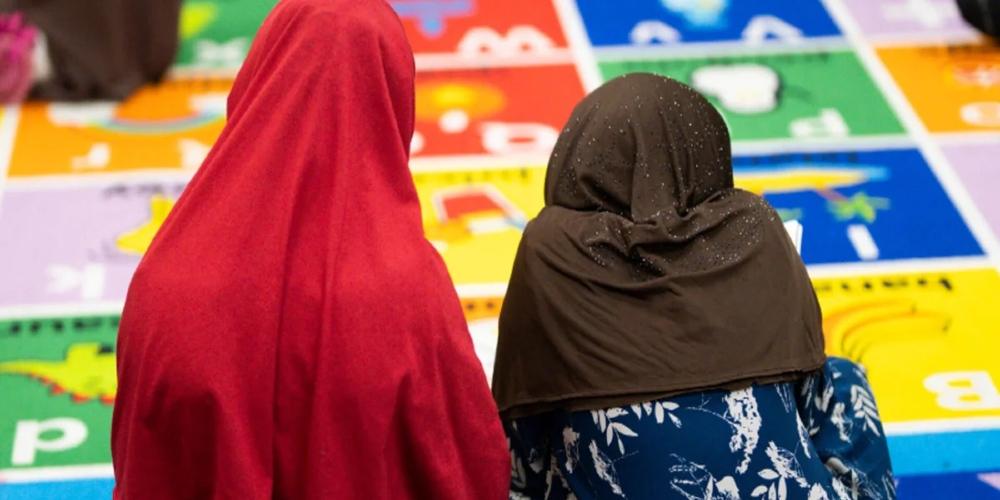
President Donald Trump shared a simple video of a Minnesota kindergarten graduation, one that captured a striking visual shift in American public education. Dozens of young girls, many in hijabs, marked the end of their first year of formal schooling.
Rather than reflect on what this image reveals about rapid demographic transformation and cultural integration, children’s YouTube sensation Ms. Rachel rushed to Instagram with a message celebrating the head coverings while implicitly scolding the president.
This episode is not merely about one celebrity’s social media post. It exposes a deeper pattern: the weaponization of children’s content to advance progressive narratives on faith, culture, and identity. In an era when many Americans sense their nation’s foundational character slipping away, figures like Rachel Griffin Accurso—known to millions of toddlers and parents as Ms. Rachel—position themselves as arbiters of “kindness” while sidelining legitimate concerns about cohesion and long-term societal costs.
The video Trump reshared, originally highlighted by End Wokeness, showed kindergarteners in St. Paul, Minnesota, dressed in graduation regalia. A significant number of the girls wore traditional Islamic hijabs. Trump’s decision to amplify it without additional commentary invited viewers to observe this reality for themselves.
Ms. Rachel responded by directly addressing the children: “I saw some of you wore a hijab to your graduation. I am glad you wore something meaningful and special to you and your family. I think hijabs are beautiful.”
She went further, equating hijabs with kippahs or cross necklaces, framing all as neutral expressions of culture and religion. “No one’s hurtful words can take away our worth and our value,” she added, in what appeared a clear swipe at the president. The post culminated in assurances of widespread support and advice to report “hurtful” comments to trusted adults.
Accurso’s intervention fits a pattern. The educator, with over 20 million YouTube subscribers, has previously visited immigration detention facilities to spotlight supposed trauma, advocated on Gaza-related issues, and faced scrutiny for interactions with antisemitic content. Her brand, built on songs and learning for the very young, increasingly veers into adult political territory. Parents who trusted her for neutral early education now confront activism dressed in pastel tones.
Minnesota’s large Somali immigrant community has reshaped parts of the state, including its schools. Demographic realities like these deserve honest discussion, not reflexive celebration or accusations of bigotry. The hijab itself carries layered meanings: for some, a voluntary act of modesty; for others, especially in stricter interpretations of Islam, a marker of separation and submission.
America’s experiment in religious liberty assumes newcomers embrace the pluralistic framework that protects individual conscience, not import systems that challenge it.
Critics rightly question whether public schools—funded by all taxpayers—should normalize symbols tied to ideologies with documented tensions regarding women’s rights, free speech, and assimilation. Trump’s post, far from an attack on children, served as a visual reminder of policy consequences from mass immigration without sufficient emphasis on American values.
Ms. Rachel’s response, by contrast, prioritizes feelings and inclusion over these harder truths.
One wonders: where was this vocal defense of religious expression when Christian symbols face routine marginalization in the public square? The selective application of “diversity” reveals the game. Progressive voices cheer certain faiths while treating Christianity as the default target for exclusion. This inconsistency undermines the very tolerance they claim to champion.
Consider the broader stakes for the rising generation. Children absorb cultural cues early. When entertainers elevate one religious practice amid a sea of young Muslims in American kindergartens, they implicitly downplay the Judeo-Christian roots that built the republic.
History shows that unassimilated enclaves breed division, not strength. Constitutional principles protect worship, but they do not require society to pretend every outcome of open borders enriches the whole.
In the Gospel of Matthew, our Lord warned, “But whoso shall offend one of these little ones which believe in me, it were better for him that a millstone were hanged about his neck, and that he were drowned in the depth of the sea” (Matthew 18:6).
This sobering charge demands vigilance over what influences the youngest hearts and minds. Fashioning political statements around kindergartners, whether through viral videos or celebrity rebuttals, risks turning innocence into ideological battleground.
Parents retain primary responsibility here. They must scrutinize the media their children consume and engage forthrightly with the cultural transformations unfolding in their communities. Trump’s willingness to highlight uncomfortable visuals serves as a prompt for renewed focus on immigration policy, assimilation, and the preservation of America’s distinct heritage.
Ms. Rachel’s hijab endorsement may play well in certain circles, but it sidesteps the substantive conversation Americans deserve. True kindness does not equate to silence about patterns that threaten the nation’s future. As classrooms reflect changing demographics, clarity about shared values—not selective celebration—must guide the way forward.