
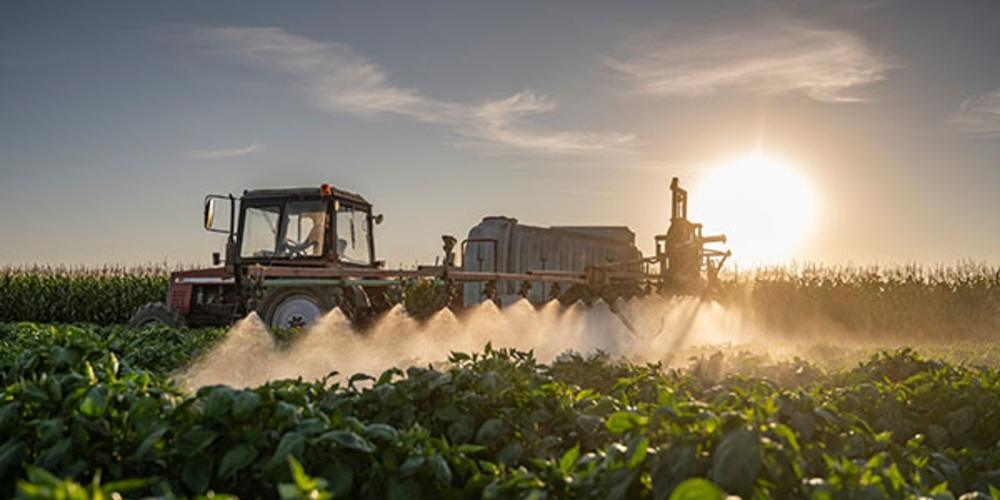
- Nearly half of the world’s 934 million farmers are poisoned by pesticides annually, with an estimated 402 to 433 million cases each year.
- Developing countries in southern Asia, Southeast Asia, and East Africa bear the heaviest poisoning burden.
- Burkina Faso has the highest national poisoning rate, with nearly 84% of farmers affected each year.
- Non-fatal poisonings far exceed deaths but cause chronic illness from repeated low-level exposure.
- Global pesticide use has doubled since 1990, while underreporting hides the true crisis.
(Natural News)—Nearly half of the world’s 934 million farmworkers are unintentionally poisoned by pesticides every year, amounting to an estimated 402 to 433 million cases annually, according to new research published in Frontiers in Public Health that exposes what experts call a hidden global health crisis.
The study, conducted by researchers from the Pesticide Action Network, analyzed 214 scientific publications from 2006 to 2023 alongside World Health Organization mortality data covering 139 countries. Researchers found that about 11,000 of those poisonings prove fatal each year, with nearly 60% of deaths concentrated in India alone. The findings build on a 2020 review that had already put the annual toll at 385 million cases, underscoring how persistent underreporting continues to obscure the true scale of the problem.
Global South bears disproportionate burden of poisonings
The heaviest impacts fall on developing nations, where farmers lack protective equipment, clean water for washing, and access to healthcare. Southern Asia, Southeast Asia and Eastern Africa recorded the highest numbers of non-fatal poisoning cases. In Burkina Faso, nearly 84% of farmers experience acute pesticide poisoning annually, which is the highest national rate documented in the study.
“Behind these staggering numbers are farmers, workers and families paying a terrible human price for pesticide exposure,” said Jayakumar Chelaton, executive director of PAN India. “South Asia is bearing an enormous burden, with highly hazardous pesticides such as paraquat implicated in devastating poisoning incidents. This research exposes a crisis that can no longer be ignored.”
Farmers typically absorb toxic chemicals through their skin while mixing and applying pesticides, touching treated crops, and handling contaminated equipment. Leaky knapsack sprayers, hot temperatures that make protective gear impractical, and lack of washing facilities all contribute to the poisoning toll in tropical and subtropical regions.
Non-fatal poisonings reveal a deeper crisis
The study’s authors argue that policies have focused too narrowly on deaths while ignoring the far larger number of non-fatal poisonings that cause immediate symptoms including headaches, nausea, vomiting and skin rashes. Repeated low-level exposure over time may produce no immediate symptoms but can lead to serious chronic illnesses.
“The high number of non-fatal, unintentional pesticide poisonings makes it clear that the usual focus on fatalities is not enough,” said Susan Haffmans, senior adviser on pesticides at PAN Germany. “We can no longer accept that those who work in the fields and grow our food are exposed to harmful pesticides and become sick.”
The study’s tally also leaves out an estimated 84 million children working in global agriculture, a group researchers say is even more vulnerable to toxic chemicals than adults, along with rural families exposed through spray drift and other environmental contamination.
Pesticide use doubles since 1990 amid policy gaps
Global pesticide consumption has more than doubled since 1990, the study found, even as the human cost becomes increasingly clear. Much of that growth stems from contract farming arrangements that legally obligate growers to use specific chemical inputs, leaving them dependent on the agrochemical companies selling those products for guidance, since independent, non-corporate advice is often hard to come by.
“Systemic failures in data collection have masked this global public health crisis,” said Dr. Sheila Willis, head of international programs at PAN UK. “Underreporting remains widespread, driven by limited access to healthcare and a lack of clinical training or systems to recognise or record pesticide poisoning.”
PAN UK, for its part, is pushing European regulators to stop manufacturers from exporting pesticides banned domestically for health or environmental reasons to countries with weaker safety standards. The group is also calling on governments and companies to phase out Highly Hazardous Pesticides by 2035 under the Global Framework on Chemicals and to help farmers transition to safer, chemical-free crop protection methods.
The findings arrive as U.S. lawmakers weigh their own pesticide policy. This year’s Farm Bill negotiations have included provisions that would bar states and courts from requiring pesticide health warnings beyond what the EPA already recognizes in a move critics say would strip Americans of the same kind of disclosure this study suggests farmers worldwide are being denied. For a public already wary of corporate influence over what goes into their food and medicine, the message is a familiar one: when profit and transparency collide, transparency tends to lose. Farmers, and the people who eat what they grow, deserve to know exactly what they’re being exposed to — not a watered-down version filtered through industry lobbying.
Sources for this article include: