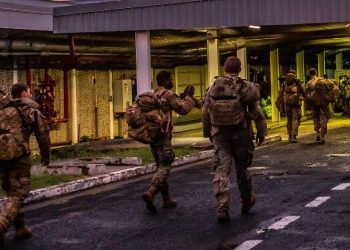
The open stretches of public land along California’s southern frontier have long served as a quiet reminder of America’s vulnerability. But no more. On Wednesday, the Trump administration handed over jurisdiction of roughly 760 acres in San Diego and Imperial counties to the U.S. Navy, carving out a fresh militarized zone to clamp down on the relentless tide of illegal crossings. This corridor, snaking from the edge of the Otay Mountain Wilderness nearly to the Arizona line, traces through the Imperial Valley and past border towns like Tecate—a notorious hotspot where smugglers and cartels have run roughshod for years.
It’s a direct callback to 1907, when President Theodore Roosevelt first set aside these lands for exactly this purpose: guarding the nation’s edge. Now, with the Navy in charge for the next three years, the focus sharpens on bolstering patrols, erecting barriers, and deploying surveillance tech to choke off the flow.
The Department of the Interior explained that this slice of terrain “is one of the highest traffic regions for unlawful crossings along the southern border, creating significant national security challenges and contributing to environmental degradation.” Trampled trails, trashed habitats, and worse—trafficked humans funneled through like commodities—will face a stiffer reckoning.
Interior Secretary Doug Burgum didn’t mince words in the announcement. “Trump has made it clear that securing our border and restoring American sovereignty are top national priorities,” he said, adding that the move puts “the safety and security of the American people first.”
It’s the kind of no-nonsense action that echoes the expansions rolled out earlier this year in Arizona, New Mexico, and Texas, where similar handoffs to the military have slashed apprehensions by more than 90% in some sectors, according to Border Patrol data. Nationwide, illegal entries have cratered to levels unseen since the 1960s, a stark turnaround from the chaos of prior years when millions poured across unchecked.
Yet not everyone’s cheering. Groups like the Brennan Center for Justice are sounding alarms, claiming these zones turn soldiers into “a de facto border police force, with soldiers apprehending, searching, and detaining people who cross the border unlawfully.”
They warn of “alarming implications for democratic freedoms” and accuse the president of “stretching his emergency powers past their limits to usurp the role of Congress.” It’s the same chorus that howled when Trump declared illegal immigration a national emergency back in January, paving the way for over 7,000 troops, drones, and armored vehicles to flood the line. Legal challenges have piled up, including a fresh federal ruling this week ordering the administration to pull back California National Guard deployments in Los Angeles—troops Trump federalized without Governor Gavin Newsom’s blessing to ramp up interior enforcement.
With cartels being forced to turn to alternative entry routes—tunneling under barriers, launching drones loaded with fentanyl, and even clashing with agents in firefights—handing the reins to the Navy is a countermeasure against escalation. Whispers in border communities suggest smuggling networks, possibly with ties to foreign adversaries, have adapted too well to the old setup.
Is this just about illegal aliens, or is it a quiet admission that the southern line has become a pipeline for something deadlier? Recent seizures, like the massive Venezuelan oil tanker nabbed off the coast just yesterday for funneling sanctioned crude to terror groups, hint at how focused the administration is on keeping the borders secure.
For families in places like El Centro or Calexico, the change hits close to home. Ranchers who’ve watched their properties turn into no-man’s-lands report fewer intrusions already from the earlier zones.
“We’ve been asking for this for decades,” one Imperial Valley farmer told Fox News, his voice carrying the weariness of too many close calls. Environmentalists decry the footprint of military ops, as they’re wont to do, though the Interior Department counters that curbing foot traffic will let the land heal—fewer boot prints scarring the desert floor.
This is triage for a wound that’s festered too long. The California push caps a year of methodical fortification, from razor wire in the Rio Grande Valley to helicopter sweeps over the Sonoran sands. With Border Czar Tom Homan vowing no letup—recently defending ICE sweeps in sanctuary cities like Minneapolis as vital to rooting out “public safety threats”—the message rings clear: the era of porous borders ends now. Americans tired of footing the bill for unchecked influxes, from strained hospitals to cartel-fueled crime spikes, can see the payoff in the numbers. Crossings down, communities safer, sovereignty reclaimed.
As the sun sets over the new Navy domain, one thing stands certain: the days of treating the border like a suggestion are over. This land, once a backdoor for the lawless, now stands as a testament to resolve—a bulwark not just for California, but for the republic it anchors.